
4 Hidden Parts of Your Human Design
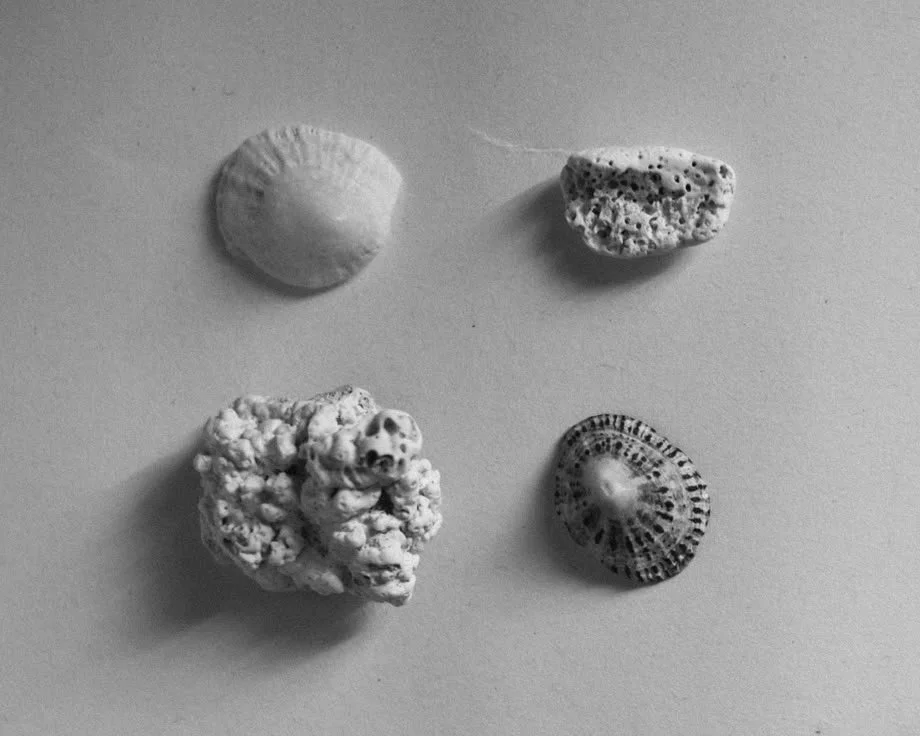
How you digest life, what actually drives you, where you settle, and how you see.
~
There's a layer of your Human Design chart that almost never comes up in a first reading. Not because it's unimportant ~ if anything, it's some of the most practical, immediately useful information in the entire system ~ but because most readings simply run out of time before they get there. Type, strategy, authority, maybe your profile if you're lucky. That's usually where the conversation ends.
But underneath all of that sits another layer entirely: your Variables, or what's often called the parts "below the line" ~ literally the section that sits beneath the main bodygraph on your chart. These aren't abstract concepts. They're the parts of your design that quietly and directly explain why certain environments settle your nervous system while others fray it, why some eating habits leave you energised while others leave you flat, what's actually driving you underneath your conscious reasoning, and how you naturally perceive the world compared to everyone else in the room.
Four categories live here: Determination, Motivation, Environment, and Perspective. Each one governs something different, and together they explain a huge amount about your daily experience of being you ~ often more than type and authority combined, because this is where the system stops being general and starts being specific.
Determination governs something deceptively simple: how your body actually processes. Not just food, though food is part of it, but experience, information, life itself. Ever wonder why certain environments leave you steady and others leave you completely wrung out for no reason you can point to? This is usually why. Your Determination profile shapes your ideal eating rhythm, your ideal working conditions, even the kind of light and sound your body metabolises best. It breaks down into six aspects, each one a different lens on how you take life in.
The six aspects of Determination: Appetite · Taste · Thirst · Touch · Sound · Light
Motivation is the layer of your chart most people mistake for personality, when really it's closer to fuel. It's what's actually propelling you forward underneath your conscious reasoning ~ and when you're already living your strategy and authority well, understanding it is like adding rocket fuel to everything else you're doing. Fear, motivated by security and risk mitigation. Hope, motivated by possibility and potential. Desire, motivated by change, achievement, and progress. Need, motivated by meeting the needs of others and the collective. Guilt, motivated by responsibility and fixing what's broken. Innocence, motivated by seeing the whole picture and doing right by it. Each one also carries a shadow version, its transferred state ~ a kind of signpost telling you when you've drifted out of alignment with your actual motivation and started operating from someone else's instead.
The six Motivations: Fear · Hope · Desire · Need · Guilt · Innocence
Environment might be the most underrated variable in the whole system, and also the most immediately useful. It answers one question: what kind of place actually settles your nervous system? Not aesthetically. Physiologically. Get this wrong for long enough and you'll feel a low hum of resistance running under everything you do, without ever quite knowing why. Caves, built on privacy, control, and selective interaction. Markets, built on exchange, networking, and showcasing what you know. Kitchens, built on transformation and hands-on creation. Mountains, built on elevation, overview, and distance. Valleys, built on community and the pulse of daily human activity. Shores, built on transition ~ the space where one thing is becoming another. Set up your life anywhere close to your actual Environment and something shifts. Productivity stops feeling like effort. Creativity stops feeling forced. The nervous system, given the right container, just settles.
The six Environments: Caves · Markets · Kitchens · Mountains · Valleys · Shores
Perspective is the lens itself ~ not what you see, but how you're built to see it. It colours every interaction, every decision, every read you make on a room before you've consciously thought about it. Survival, which reads the world through pattern and reliability. Possibility, which sees what hasn't happened yet. Power, which reads the hierarchy underneath every situation. Wanting, which orients around community and unmet need. Probability, which looks for the practical, feasible path. Personal, which experiences the outer world as a direct reflection of the inner one. None of these are better than the others. They're just different filters ~ and knowing yours changes how much sense the rest of your life starts to make.
The six Perspectives: Survival · Possibility · Power · Wanting · Probability · Personal
You've probably felt all four of these your whole life without ever having the language for them ~ the environments that quietly wreck you, the old motivations still running the show underneath everything, the version of yourself a room reflects back before you've said a single word. This isn't new information. It's just the language finally catching up to what your body already knew.
I put together a full guide walking through all four Variables in depth ~ what each one actually looks like on your own chart, and how to start living in closer alignment with what's already true about how you function. Explore here.
The personal lore — the longer threads, the lived spirals, the stranger and closer-to-the-bone writing — lives over on Substack. If this resonated and you want to go deeper, that's where you'll find me: Spirals of Becoming →
And if you're ready to understand your own Human Design — your type, your strategy, your unique gifts for this paradigm — I offer one-to-one readings and mentorship. Book a reading or explore working together →